Heatless Beach Waves: 4 Overnight and No-Heat Methods
There's a song I hum at low tide, early, when the water pulls back and leaves the sand in long, rippled lines. Every morning the sea draws the same soft waves on the shore without lifting a finger, and nobody hands it a curling iron. Your hair can learn the same trick while you sleep.
So let me give it to you plainly. Heatless beach waves happen when you set damp hair into a shape, let it dry completely in that shape, then shake it out. The four methods that work best are loose braids, twist buns, a robe tie or heatless curler, and a fast damp twist with a sea salt mist. Pick bigger sections for loose, beachy bends and smaller ones for tighter waves. Straight hair needs a little texture spray to hold. Curly and coily hair won't gain waves it doesn't have, but these methods will stretch and define the pattern you were born with.
- Heatless beach waves come from setting damp (not wet) hair in a shape and letting it dry fully. Braids, twist buns, a robe tie or a heatless curler and a quick damp twist all work.
- Big sections make loose, beachy bends. Small sections make tighter, crimpier waves. That one choice matters more than which method you pick.
- Straight, slippery hair needs a texturizing mist and a firmer set. Wavy hair needs the least help. On curly and coily hair, these methods stretch and define your pattern instead of creating waves.
- Finish with a couple of drops of hair oil on your ends, then break up the waves with your fingers, never a brush.
How heatless beach waves actually work
Hair holds whatever shape it dries in. When it's wet, the temporary bonds inside each strand loosen. As it dries, those bonds re-form around whatever you've wrapped it into, a braid, a twist, a bun. That's the whole secret, and it's why two things matter more than anything else:
- Dampness. Aim for about 70 to 80 percent dry. Dripping hair may still be damp at sunrise, and a damp set collapses the minute you let it go. Bone-dry hair barely takes a shape at all.
- Section size. Two big sections give you that loose, just-swam look. Six to eight small sections give tighter, more defined waves that can drift toward crimped.
4 ways to get beach waves without heat
1. Loose braids (the classic overnight wave)
This is the one I'd hand a beginner. It's hard to mess up and works on most lengths past the shoulders.
- Start with damp hair and mist your mid-lengths with a texturizing spray if your hair is fine or straight.
- Split into two sections for loose waves, or four for more texture.
- Braid each section loosely, starting 2 to 3 inches below the roots so you don't get a ridge up top. Use soft ties, not tight elastics, so the ends don't dent.
- Tie the ends with soft elastics or scrunchies and sleep on them.
- In the morning, unbraid and gently pull the waves apart with your fingers.
2. Twist buns (the fullest, bounciest waves)
Twist buns give more volume at the root than braids do, which is a gift if your hair goes flat by noon.
- Divide damp hair into two sections, one on each side of a center part.
- Twist each section away from your face until it starts to coil on itself.
- Wind the twist into a bun on top of or behind your head and secure it with a scrunchie or claw clip.
- Sleep, then unwind slowly and separate the waves with your fingertips.
Twisting away from your face opens the waves around your cheekbones, which is the shape most people picture when they say "beach hair."
3. Robe tie or heatless curler (the smoothest, most polished bend)
A satin heatless curler rod and a plain bathrobe belt do the same job. Each gives soft, uniform waves that look closest to a curling wand.
- Center the rod or robe tie on top of your head, with equal lengths hanging past each ear.
- Take a 1 to 2 inch section of damp hair at the front and wrap it around the tie, away from your face.
- Keep adding small pieces as you wrap down, like a loose French braid around the rod.
- Secure the ends of both sides with scrunchies. Sleep on your back or side.
- Unwrap in the morning, then shake and finger-comb.
If you have shorter hair, this one is tricky below about chin length. You'll get bends, but not much wave.
4. Damp twist with sea salt mist (the no-sleep, same-day version)
No overnight required. This is my tide-pool trick for a day when you showered in the morning and need waves by dinner.
- Mist damp hair with a sea salt texturizing spray, focusing on mid-lengths and ends.
- Take 1 to 2 inch sections and twist each one tightly, then let it go so it springs back in a loose spiral.
- Scrunch upward with your palms a few times.
- Let it air-dry fully without touching it. Depending on thickness, that's 1 to 4 hours.
- Scrunch once more when dry to break any crunch.
This gives the most piece-y, lived-in texture of the four, and it's the closest you'll get to hair that just came out of the ocean.
Which method fits your hair length and type
Before you pick a method, check your length and texture. Here's how I'd match them up.
| Your hair | Best method | Sections | What to expect |
|---|---|---|---|
| Straight, fine, chin to shoulder length | Damp twist with sea salt mist, or 4 small braids | 4 to 6 | Soft bends. Mist before setting so the shape grips. |
| Straight, shoulder length or longer | Robe tie or heatless curler | Many small wraps | The most polished wave. Holds about a day. |
| Straight and thick | Twist buns | 2 to 4 | Big, full waves. Start a little drier so it finishes by morning. |
| Naturally wavy (2A to 2C) | Loose braids or damp twist | 2 | Your own pattern, just more even. Needs the least help. |
| Curly (3A to 3C) | Twist buns or large loose braids | 2 to 4 | Stretched, elongated curls with less shrinkage. |
| Coily (4A to 4C) | Chunky twists or braid-outs | 6 or more | A defined, stretched set. It shapes your texture rather than turning it into beach waves. |
| Layered or long bob | Damp twist with sea salt mist | Small sections | Piece-y texture. Short layers may slip out of braids and buns. |
A note for curly and coily hair
Your hair already has a beautiful pattern, so think of these methods as tools to stretch and define it, not to "create" waves. Braid-outs and twist-outs on damp, moisturized hair give a looser, longer look with less shrinkage. Skip heavy salt sprays if your curls run dry, and lean on oil or your usual leave-in instead.
How to make heatless waves last longer
- Let it dry all the way. Even a little dampness at the center of a braid will drop the wave by noon. If you're unsure, leave it in another 30 minutes.
- Use the right grip. Fine and straight hair holds better with a mist of texturizing spray before setting. Wavy hair usually doesn't need it.
- Sleep on silk or satin. A smooth pillowcase means less frizz on the outside of your braids.
- Oil the ends, not the roots. One or two drops of hair oil warmed between your palms, pressed into the last few inches, takes the crunch out and adds shine. On fine hair, start with one drop.
- No brushes. A brush turns waves into frizz. Use your fingers or a wide-tooth comb.
- Refresh on day two. Mist lightly, twist a few front pieces around your finger and let them sit for ten minutes.
If you've got fine hair and you're worried oil will weigh your waves down, I wrote a whole guide to hair oil for fine hair. And if your ends feel straw-like after a summer of salt and sun, read up on the best hair oil for dry hair.
What I reach for on a beach-wave morning
You don't need a cabinet full of products. Two bottles do almost everything, and a third is just for the fun of it.
- The Siren Sea Salt Hair Tonic ($25). A texturizing mist made for soft waves and volume. I use it before twisting or braiding fine hair, and for the same-day damp twist method. It carries my scent, pistachio almond, jasmine and sandalwood.
- The Siren Hair Oil Elixir ($30, 2 oz). A blend of coconut, sweet almond, avocado, argan and vitamin E oils. A few drops on the mid-lengths and ends after you shake out your waves softens any crunch from the salt.
- Sea Salt Hair Tonic Bundle ($85). If you share a bathroom with a sister or roommate who also wants waves, the bundle lets you each pick a scent.
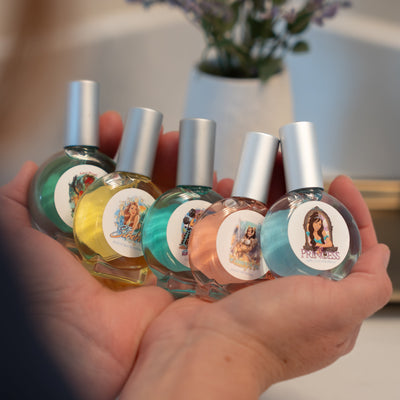
- The Siren Travel Size Perfume ($15, 15 ml). Not for your hair, but waves and a little scent at the wrists make the whole look feel finished. If you're packing for a trip, here's my take on travel size perfume.
FAQ
Can you get beach waves overnight without heat?
Yes. Set damp hair in two loose braids, two twist buns or around a robe tie or heatless curler before bed, and take it down in the morning once it's completely dry. Bigger sections give looser, beachier waves.
Should hair be wet or dry for heatless waves?
Damp, around 70 to 80 percent dry. Soaking wet hair often won't dry overnight and can come out limp or kinked, while fully dry hair barely holds the shape unless you mist it first.
How long do heatless beach waves last?
Usually until your next wash on wavy or textured hair, and often a day or so on fine, straight hair. Sleeping on a silk or satin pillowcase and refreshing with a light mist helps them last longer.
Do heatless waves work on straight hair?
They do, but straight hair needs more grip. Mist with a texturizing spray before you set it, use slightly smaller sections, and leave it in for the full night.
Is sea salt spray drying for hair?
Salt-based texturizers can feel dry on some hair, especially if it's already thirsty or color-treated. Use a light mist rather than soaking your hair, and seal your ends with a few drops of hair oil.
Back to the tide
The sea doesn't rush its waves, and neither should you. Braid it, twist it, wrap it or mist and scrunch it, then let time and air do the work while you sleep or sip your coffee. By morning, your hair will have that same soft ripple the tide leaves on the sand, and you'll be humming my song without knowing where you heard it.
Every beauty has a story.
— The Siren